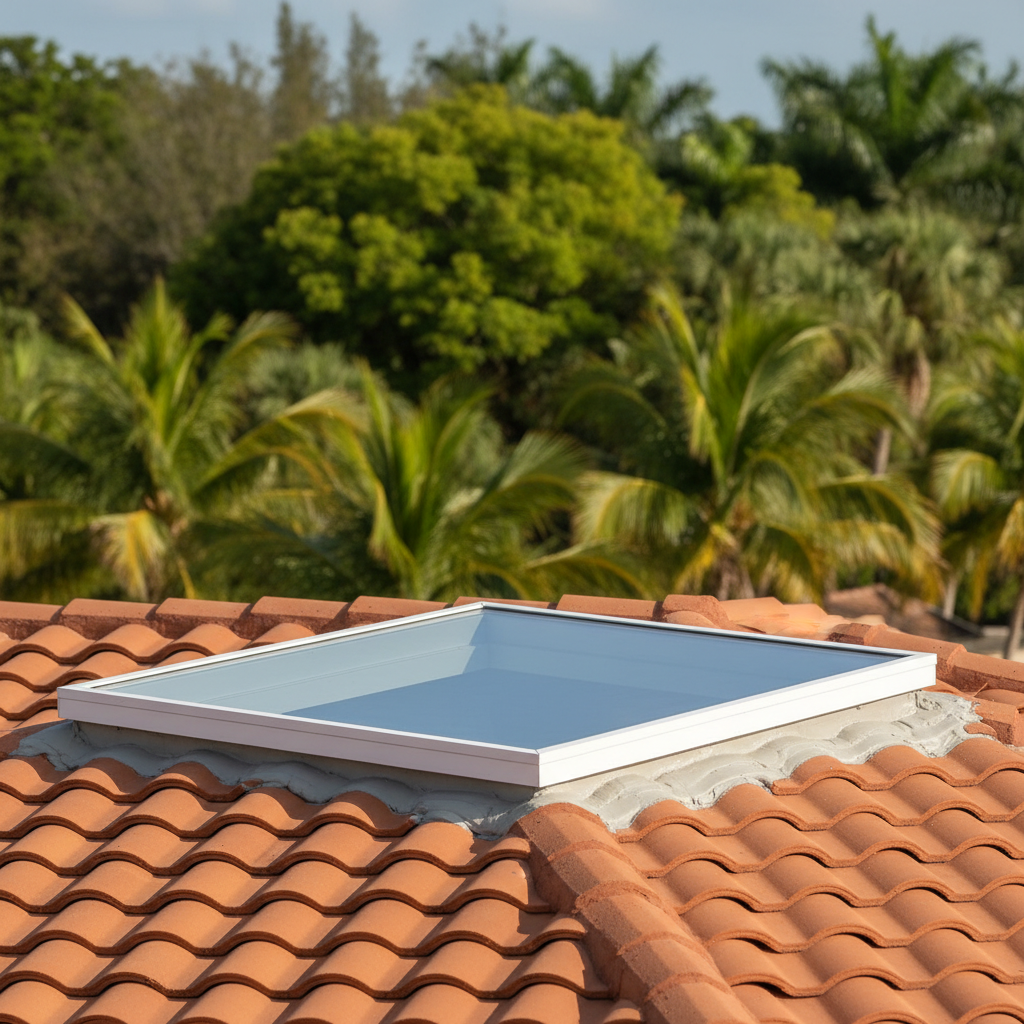
Charis Window Installation receives many questions about putting a skylight into a roof here in Sunrise. Homeowners often ask about afternoon storm leaks and code compliance. Charis Window Installation provides a straightforward look at what you actually need to know before cutting a hole in your roof in Sunrise, FL.
1. Will a skylight cause my roof to leak during heavy summer storms?
A skylight will not leak if it is installed right. The truth is, a skylight is essentially an intentional hole in your roof water plane. Whether a skylight leaks comes down entirely to the flashing and how the flashing integrates with your underlayment and tile. Charis Window Installation sees plenty of cheap builder-grade installs fail because water finds a way past old metal or improper steps. When we handle a skylight installation in Sunrise, FL, Charis Window Installation makes sure the curb and step flashing are woven tightly into the roof system so torrential downpours shed right around the skylight.
2. Do I need an impact-rated skylight in Broward County?
Broward County enforces strict building codes for windborne debris regions, making an impact-rated skylight necessary. You cannot just put any piece of glass up there in Sunrise, FL. Your skylight needs a valid Florida Product Approval showing the skylight can handle high design pressures and wind-driven rain. Charis Window Installation always uses impact-resistant laminated glass units that meet local codes. The impact-resistant glass units will not shatter into your living room if a stray branch or loose shingle flies around during a severe blow in Broward County.
3. Won't a skylight turn my house into an oven?
Old plastic dome skylights used to trap massive amounts of heat, giving skylights a terrible reputation. Modern glass options are a whole different story. Charis Window Installation installs units featuring Low-Emissivity (Low-E) coatings and low Solar Heat Gain Coefficients that reflect the brutal Florida infrared rays right back outside. Homeowners in Sunrise, FL get the natural sunlight filling up a kitchen or hallway without driving an air conditioner into overdrive.
4. How can I tell the difference between a roof leak and condensation?
Charis Window Installation settles this classic argument across neighborhoods from Sawgrass up to the Jacaranda area. During humid summer months in Sunrise, FL, warm interior air hits cold skylight glass and creates condensation. That moisture pools and drips down the drywall shaft, leaving a yellow stain that looks identical to a roof leak. A roof leak shows up right after it rains. Condensation happens on dry, humid days when an air conditioner is running hard. Insulating and venting the light shaft usually clears up condensation for good.
5. Can you put a skylight on a concrete tile roof?
Charis Window Installation can put a skylight on a concrete tile roof, but the work requires specific methods. Most homes around Sunrise, FL feature concrete or clay barrel tiles. You have to build a custom elevated curb that clears the tile field so water can flow cleanly around the perimeter. Deck-mounted units made for flat shingle roofs will not cut it here. The tile has to be custom-cut and properly sealed with mortar and apron flashing to keep the entire skylight watertight.
6. Should I replace my old skylight when I get a new roof?
If your roof is getting a full replacement in Sunrise, FL, do not reuse the old skylight. Charis Window Installation always tells homeowners it is false economy to save an aging frame. The labor is already open around the perimeter, and putting an old skylight back into brand-new underlayment is asking for trouble. Replace the skylight at the same time so the entire assembly ages together.
7. What if my room doesn't have direct roof access?
If you have a dark interior hallway, bathroom, or closet with a second floor or attic space above it in Sunrise, FL, a standard glass skylight will not work. In those spots, Charis Window Installation recommends a tubular daylight device. A tubular daylight device uses a small dome on the roof, a highly reflective silver tube running through your attic space, and a clean diffuser on your ceiling. The tubular daylight device floods dark spaces with natural light without requiring major structural shaft framing.